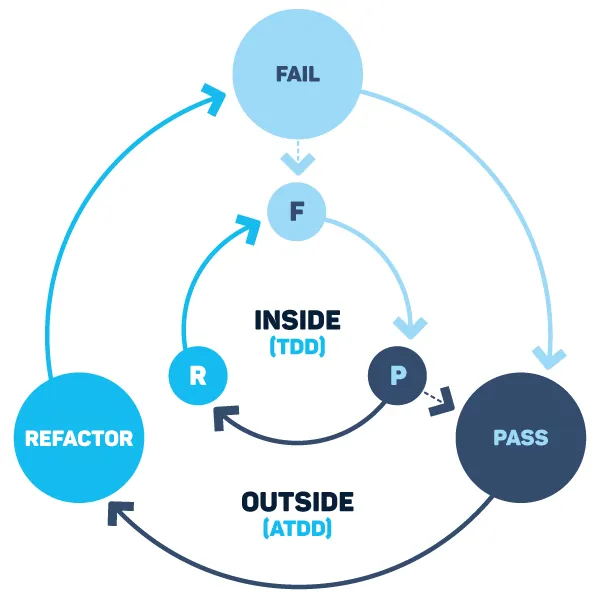
R library validation using ATDD

Brian Repko

Why this talk?

  • R/Pharma 2023 in Chicago - R Validation Hub work
  • How to write / share tests of the pharmaverse packages
  • Limited discussion on solutions - lots of JSON

Why am I talking?

  • Background is software / data engineer / bioinformatician
  • Last 15 years in biomedical research, clinical trials, and RWD
  • Last 10 years primarily in R
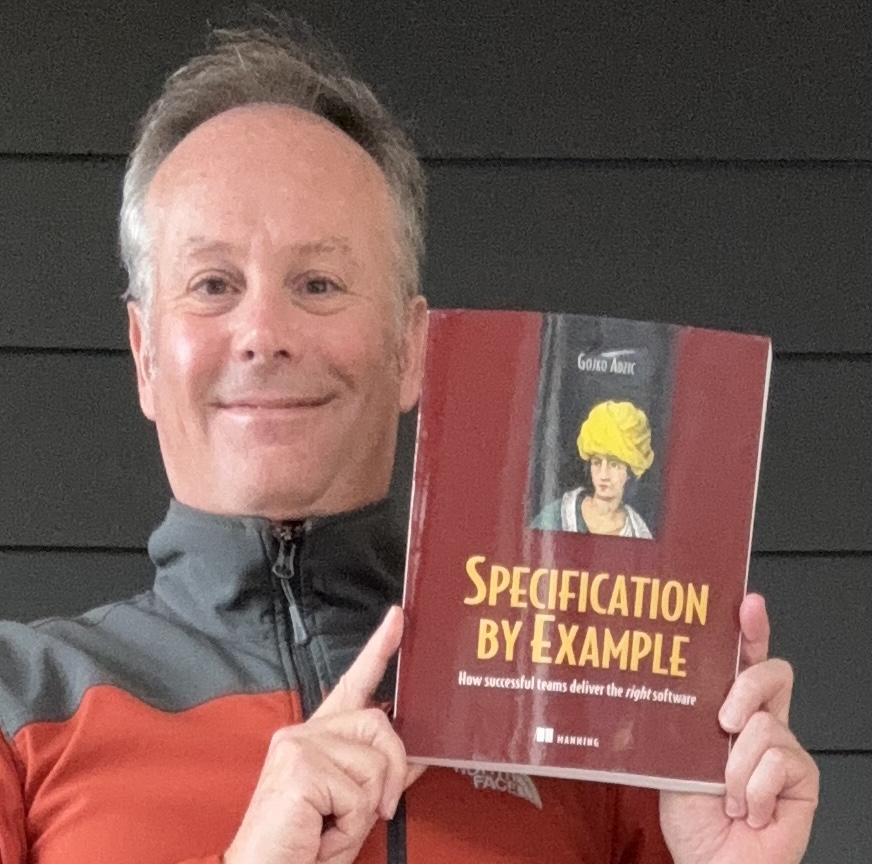
  • I was part of the JBehave team back in the day
  • Lots of presentations and actual training curriculum on this

What are we talking about?

  • System-level vs Component-level (Unit Testing)
    • Here “system” can mean set of R packages / scripts
  • Focus on non-code / plain text to enable collaboration
  • Lots of names for this practice (requirements or/and tests)
    • “Customer Tests” (from XP)
    • Behavior-Driven Development (BDD)
    • Acceptance-Test-Driven Development (ATDD)
    • Storytest-Driven Development (SDD)
    • Example-Driven Development (EDD)
    • Specification By Example (SBE)

What does this look like?

How does this work?

  • Features are plain-text files
    • Either Gherkin, Markdown, or other
  • Steps are functions together with a text-pattern
    • Parameters as placeholders in pattern - like {glue} string
    • May be placed into categories - Given/When/Then
    • Steps are either registered or discovered (via annotation)
  • Parse features into step calls via pattern matching
  • Step function call returns are collected / handled / reported

How does this work?

Note

This is from the {cucumber} R package example - next slide!

Features

# tests/acceptance/sum.feature
Feature: Sum
  Scenario: Sum should work for 2 numbers
    Given I have 1
    And I have 2
    When I add them
    Then I get 3

  Scenario: Sum should work for 3 numbers
    Given I have 1
    And I have 2
    But I have 3
    When I add them
    Then I get 6

Steps
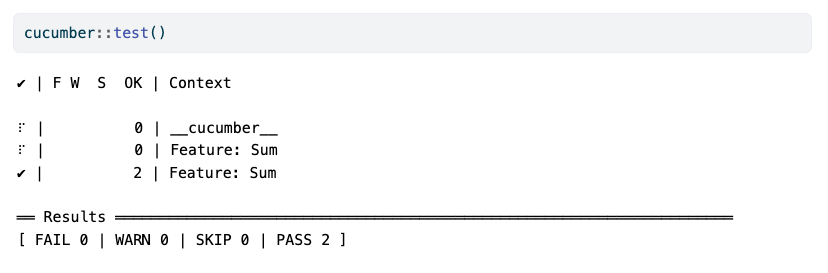
given("I have {int}", function(int, context) {
  context$numbers <- c(context$numbers, int)
})

when("I add them", function(context) {
  context$result <- sum(context$numbers)
})

then("I get {int}", function(int, context) {
  expect_equal(context$result, int)
})

What about for R?

  • {cucumber} package from Jakub Sobolewski
    • Last major release (version 2.0.0) was Apr 4, 2025
    • Current version is 2.1.1
  • Gherkin-based .feature files
  • Steps are registered via given, when, then functions
  • Execution converted to testthat code (reported this way)
  • Features and steps are typically under tests/acceptance

Opportunity

  • Ability to collect and run tests on all of pharmaverse
    • Potential to simulate clinical trial events
  • Potentially extend to R-multiverse (ROpenSci initiative)
  • Shiny app, web app, or API testing
  • There exists experience with this practice (though less in pharma)
  • For Gherkin - tooling already exists
    • Markdown code block styling (eg. ```gherkin)
    • Plugins for various IDEs

Challenges

  • How best to integrate quarto?
    • Reporting format? Execution engine? Both?
  • Do something like Gauge or leverage Cucumber?
  • Potentially extend {cucumber}
    • If we wanted to go to function annotation…
      • {plumber2} has added @then annotation
      • Would need to add function annotation during onLoad
      • Could store text-pattern in Rmd or other file
    • Quarto as reporting output
  • Potentially extend {knitr} or Quarto
  • Dealing with packages used by framework vs system under test ({callr}?)
  • Needs data storage / comparison ({diffdf}?)

Next Steps